Understanding Garage Door Insulation: R-Value Explained
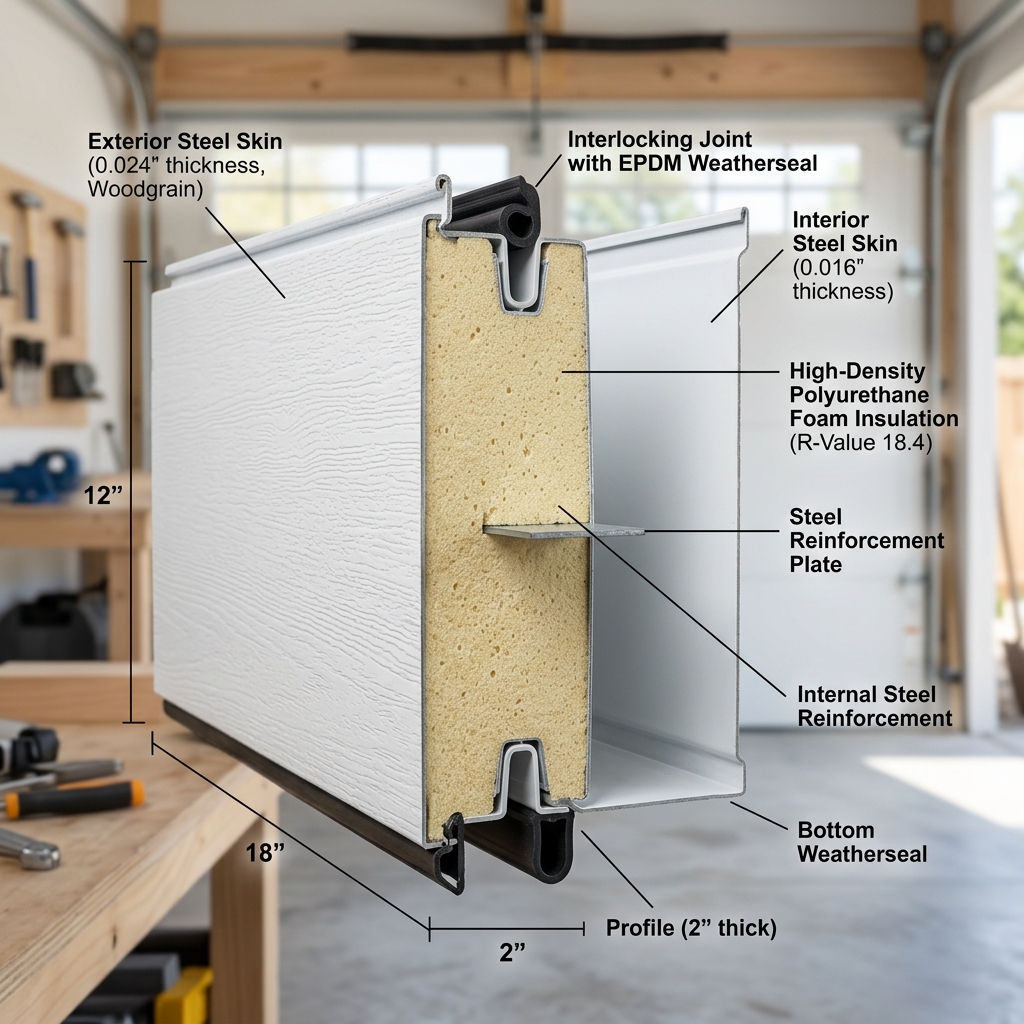
When shopping for a new garage door, you will frequently see the term "R-value" mentioned. Understanding this metric is key to choosing a door that improves your home's energy efficiency, comfort, and structural durability.
What is R-Value?
R-value measures thermal resistance—the ability of an insulating material to prevent heat flow. The higher the R-value, the better the material is at insulating your garage. An insulated garage door acts as a thermal barrier, keeping heat out in the summer and cold air out in the winter.
Polystyrene vs. Polyurethane Insulation
Garage doors are typically insulated using one of two materials:
- Polystyrene: This is a rigid foam board inserted between the steel layers of the door panels. It provides a good baseline insulation rating (usually R-6 to R-9) and is cost-effective.
- Polyurethane: This liquid foam is injected directly into the door panel, expanding to fill every crack and crevice. It bonds to the steel walls, making the panels incredibly rigid and quiet. Polyurethane doors offer the highest R-values (R-12 to R-18+).
Benefits of High R-Value Doors
If your garage is attached to your home or has living space above it, a high R-value door can significantly lower your heating and cooling costs. Additionally, insulated doors dampen street noise and are far more dent-resistant than uninsulated single-sheet steel doors.