5 Warning Signs It's Time to Replace Your Garage Door Rollers
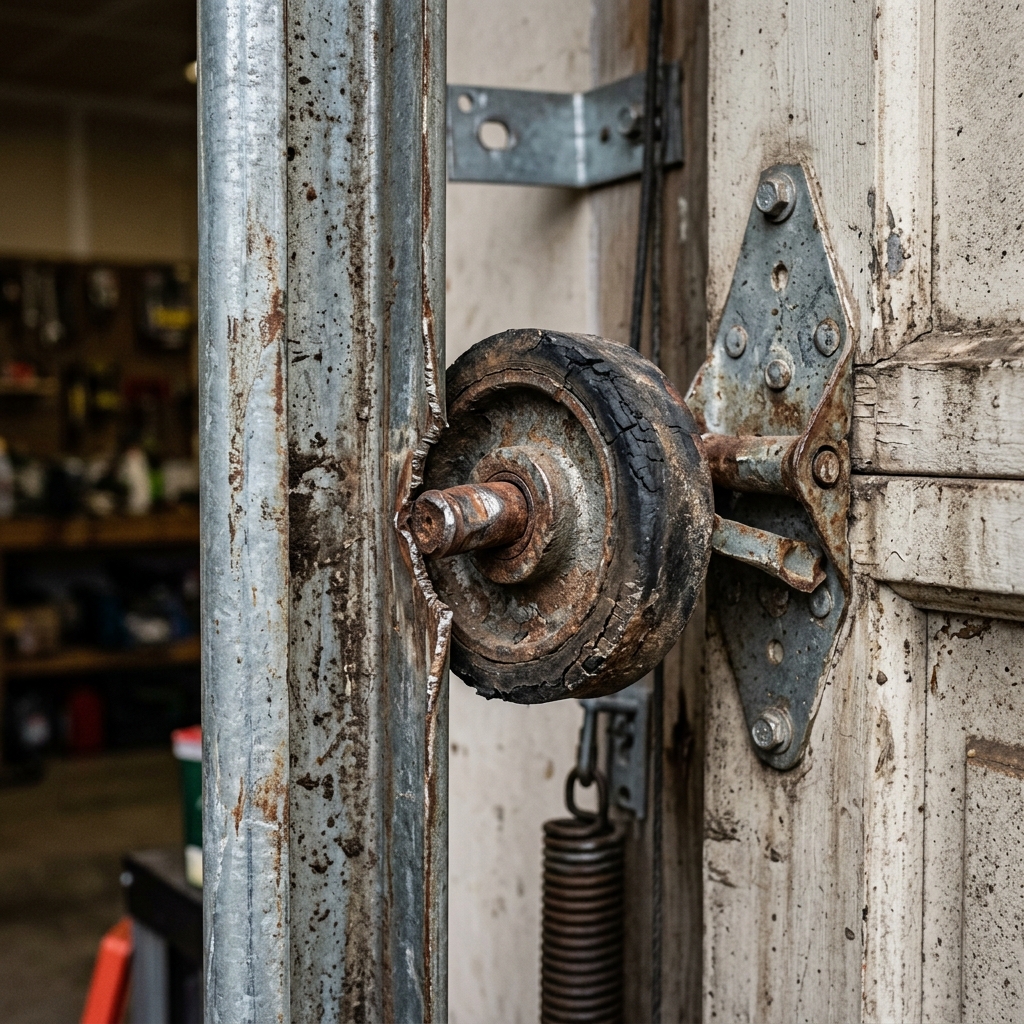
Garage door rollers are the wheels that allow your door to slide smoothly up and down the vertical and horizontal steel tracks. Because they carry the weight of the moving panels, they experience significant wear and tear. Running your door with worn, damaged, or seized rollers is a leading cause of broken opener gears and misaligned tracks.
Key Signs of Failing Rollers
Watch and listen for these five warning signs that indicate your rollers are reaching the end of their lifespan:
- Excessive Squeaking, Grinding, or Scraping: Metal-on-metal noise is a clear indicator that the bearings inside your rollers have dried out or rusted.
- The Door Shakes or Jerks: Worn wheels can develop flat spots or become misshapen, causing the door to vibrate or shimmy as it travels through the curved tracks.
- Opener Struggles or Reverses: If the rollers do not roll freely, they create friction. The opener motor detects this resistance as an obstruction and may reverse the door.
- Visible Cracks or Wiggle: Inspect the roller stems and wheels. Plastic rollers often crack, while steel rollers can wobble heavily on their stems due to worn-out bearings.
- Rollers Are Jammed or Seized: If a roller stops spinning and simply slides along the metal track, it will quickly wear down the track and strain the system.
Choosing the Right Replacement Rollers
When replacing rollers, you generally choose between steel and nylon wheels. Standard steel rollers are durable but very noisy. We highly recommend upgrading to **sealed nylon rollers**. They feature 13 ball bearings sealed to keep out dust and moisture, providing exceptionally quiet operation and lasting for over 15,000 cycles.