Torsion Springs vs. Extension Springs: What's the Difference?
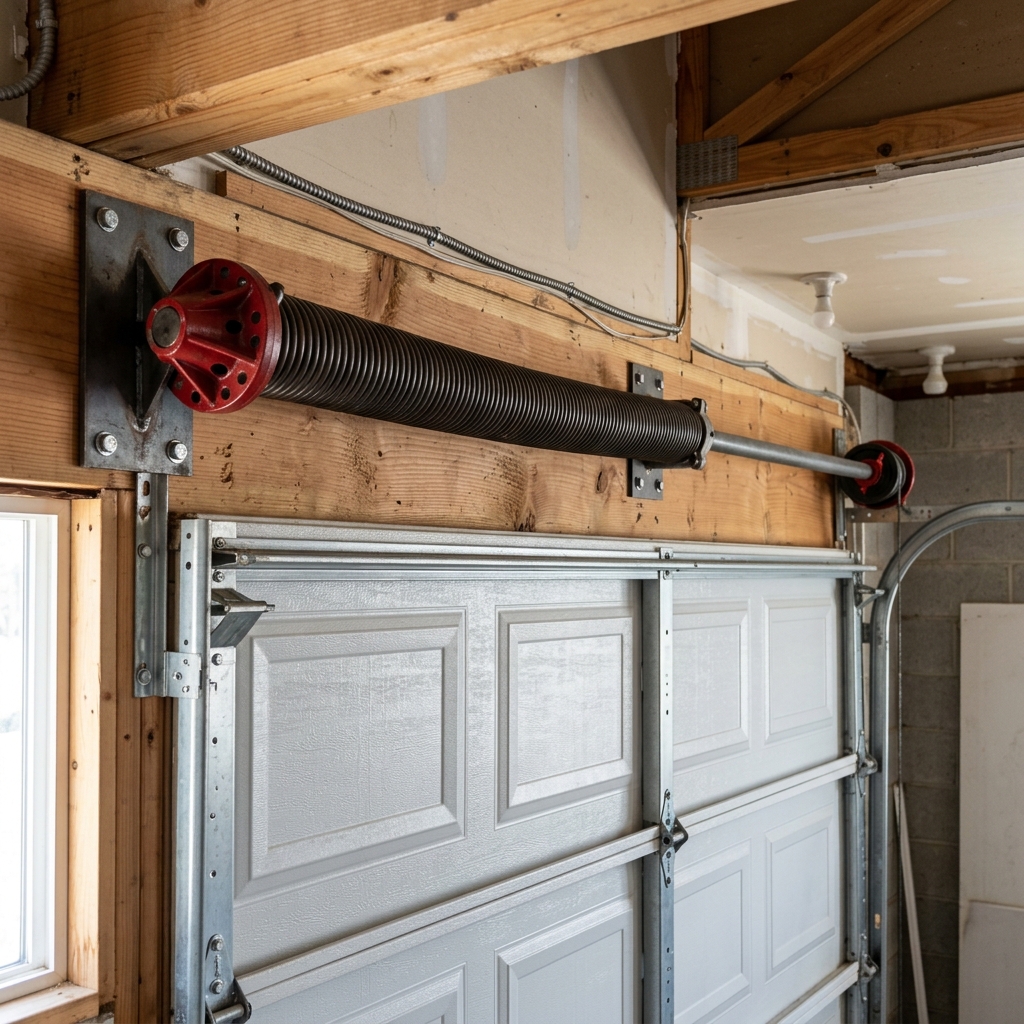
Many homeowners believe that the garage door opener motor does the heavy lifting when raising the door. In reality, the garage door springs do 95% of the work. Springs store mechanical energy to counterbalance the door's weight. There are two primary types of springs used on residential doors: torsion springs and extension springs.
Torsion Springs: The Modern Standard
Torsion springs are mounted on a steel shaft directly above the garage door header. When the door closes, cables attached to the bottom corners wind around drums, twisting the spring and storing torque.
- Safety: Because they slide over a solid metal shaft, if a torsion spring breaks, it stays on the shaft rather than flying across the garage.
- Lifespan: Torsion springs typically last for 10,000 to 20,000 cycles, providing a longer operational life.
- Operation: They offer smoother, more balanced operation, minimizing wear on the opener.
Extension Springs: The Budget Option
Extension springs run parallel to the horizontal tracks on both sides of the garage ceiling. They stretch out as the door closes to store tension.
- Safety Concerns: If an extension spring snaps without a safety cable running through it, it can fly off and damage vehicles, property, or cause severe injury.
- Lifespan: Usually rated for 5,000 to 10,000 cycles.
- Cost: Less expensive up front, but they require frequent adjustments and wear out faster.
Our Professional Recommendation
We always recommend torsion springs due to their superior safety, durability, and smooth operation. If your garage has low headroom, specialized double-track systems can still accommodate torsion setups.